Skip to main content Skip to search Skip to main navigation

Discover Teasel: A Treasure of Herbal Tradition


Dive into the world of teasel, a fascinating plant whose significance extends far beyond its spiny appearance. This resilient plant is not only an important part of ethnobotanical traditions but also plays a meaningful role in ecological conservation. 

Learn more about teasel, its plant-based properties, its diverse ethnobotanical uses, and its ecological importance. 

 For centuries, teasel has been deeply rooted in many cultures. It has been valued not only as a traditional remedy but also revered as a symbol of purity and healing. Its historical significance ranges from folk medicine to its role in rituals and myths.

Quick Summary

If you’re short on time

Why is teasel important? Teasel plays an important role for several reasons. In traditional applications, it has been used in skin care, and from an ecological perspective it contributes significantly to soil protection and the promotion of biodiversity. As a member of the honeysuckle family, known for its robust characteristics and traditional uses, teasel is utilised in various forms, ranging from the roots to the flowers. 

Teasel exists in different species: wild teasel, which is primarily used for traditional and herbal purposes, and fullers’ teasel, which has historically been used in the textile industry. Thanks to its versatility—from roots to blossoms—it is considered a valuable plant. In addition, teasel contains compounds that have been described as having antibacterial and anti-inflammatory properties. Although no serious side effects are known, allergic reactions may occur. It is also important to note that interactions with other medications are possible; therefore, consulting a healthcare professional before use is recommended.

Karde Jungpflanze auf dem Feld
karde Steckling in der Erde

What is teasel useful for?


Teasel is a natural ally for addressing common concerns. In traditional practices, it has been used in skin care. Its ability to thrive in diverse ecological niches also makes it a valuable contributor to soil protection and the support of biodiversity.

Teasel demonstrates remarkable adaptability to a wide range of environments, making it well suited to diverse climatic and geographical conditions. Its ability to thrive in challenging settings reflects the deeply rooted wisdom of nature, which is also expressed in the plant’s traditional uses. By understanding how teasel grows and flourishes, new perspectives emerge on how this plant can be thoughtfully appreciated in relation to both environmental contexts and traditional wellbeing practices.

Botanical and Pharmacological Information

Family:


Teasel, scientifically classified as part of the honeysuckle family (Caprifoliaceae), represents a fascinating example of nature’s diversity. Its membership in this plant family links it to a wide range of other species that are also known for their robust characteristics and traditional uses.

Species Used:


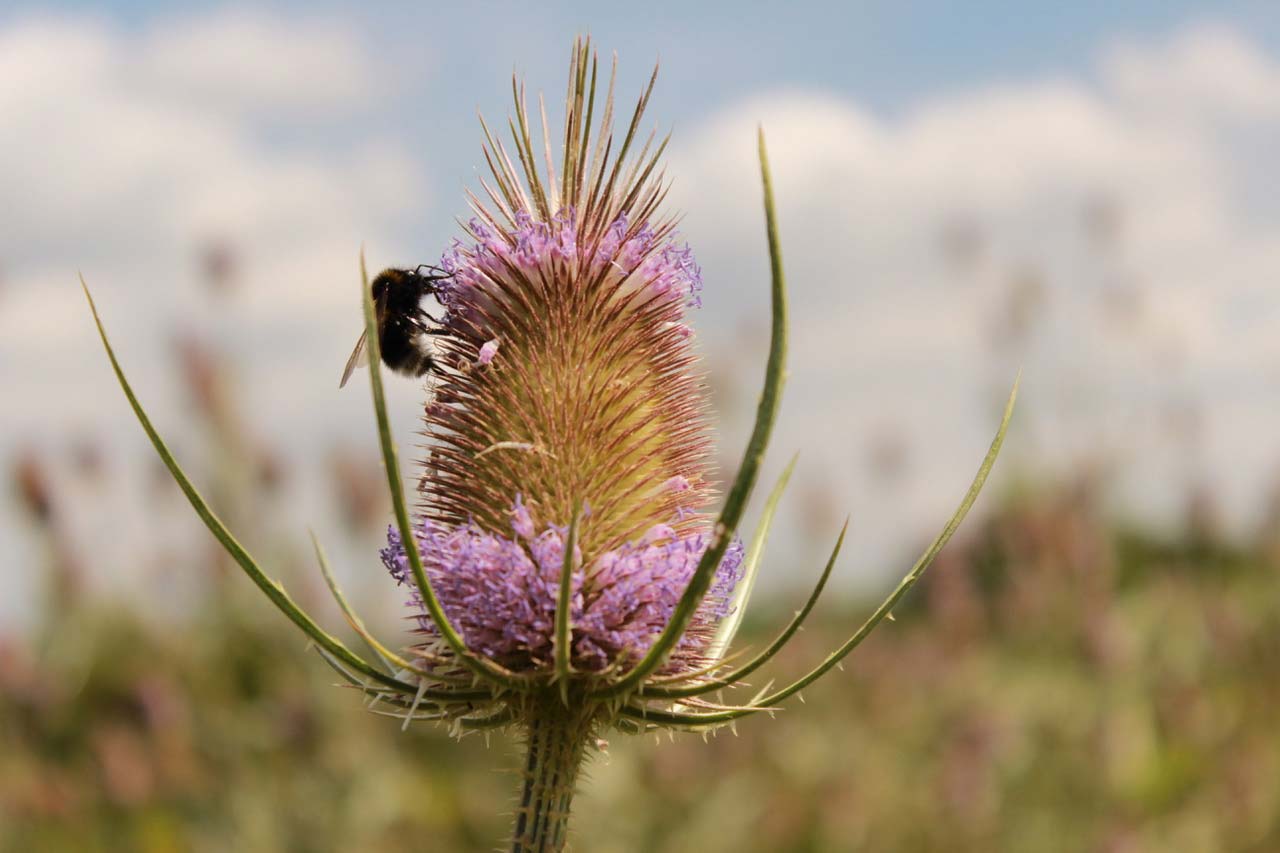
A distinction is made between wild teasel (Dipsacus fullonum) and fullers’ teasel (Dipsacus sylvestris). While wild teasel has been commonly used in traditional folk practices, fullers’ teasel played an important role in the textile industry, where its spiny flower heads were used to card wool. This historical use highlights the versatility of teasel beyond traditional medicinal applications.
Plant Parts Used:

Teasel is used in its entirety, from the deep-reaching roots to the spiny flower heads. Traditionally, the root has been particularly valued for its traditional uses, while leaves and flowers are also utilised in various practices to address a range of common concerns.

Constituents:

Teasel contains a range of pharmacologically interesting compounds, including the glycoside scabioside, as well as terpenes and caffeic acid derivatives. These constituents are known for their potential health-supporting properties.

Preparation and Dosage:

Traditional preparations of teasel vary depending on the intended use. The roots may be processed into a tincture or prepared as a tea, for example. For external applications, compresses or baths are often recommended. The appropriate dosage depends on the specific application, and care should always be taken to use natural preparations responsibly.

Wilde Karde, Kardenwurzel

Traditional and Modern Uses


Traditional Use:

Teasel has been used in a variety of traditional healing systems. In Ayurveda, it is referred to as “Devil’s Darning Needle” and is valued for its traditional properties. In Traditional Chinese Medicine, where it is known as “Xu Duan,” it is used to support kidney and liver function. Teasel also plays an important role in Western herbal traditions.

Scientific Research:

Recent scientific research has explored the properties of teasel and its naturally occurring compounds. Studies have identified various bioactive constituents, including glycosides, terpenes, and phenolic compounds, which have been investigated for their biological activity in laboratory settings. In vitro research has examined extracts and isolated fractions from Dipsacus fullonum, showing activity against certain microorganisms under experimental conditions. Some compounds demonstrated notable bioactivity, while also highlighting the importance of careful evaluation of safety and dosage, as laboratory findings do not directly translate to clinical use. Further scientific reviews have explored the broader potential of plant-derived compounds and micronutrients in the context of tick-borne pathogens. These studies suggest that natural substances may offer promising areas for further research alongside established medical approaches. However, clinical relevance, safety, and effectiveness in humans require further investigation.

Organic teasel capsules offer a convenient way to incorporate teasel into everyday life. They are easy to take and well suited for anyone seeking gentle, natural support for overall wellbeing. Our capsules are produced with the utmost care to ensure the highest standards of quality and purity. 

Our organic teasel capsules contain finely ground teasel roots from certified organic cultivation. The wild teasel is carefully harvested by hand and gently encapsulated in plant-based cellulose capsules. During production, we completely avoid the use of chemicals and artificial additives.

Our DMSO teasel root drops combine the distinctive properties of DMSO (dimethyl sulfoxide) with the valuable constituents of wild teasel. 

DMSO is known for its ability to dissolve and bind both water- and fat-soluble substances. In addition, it is often described as a “carrier,” as it can penetrate biological membranes and thereby support the extraction of plant-derived compounds.

Our teasel root tea contains no fillers, colorings, or preservatives and is 100% natural and vegan, with no added sugar. It is certified organic according to EU standards by the organic control body DE-ÖKO-070, ensuring purity and quality. 

Preparation is simple and straightforward: Add one tablespoon of the dried roots to three cups of cold water and bring to a boil. Then allow the tea to simmer gently, covered, for 10 minutes, followed by a further 10 minutes of steeping. Strain the tea and enjoy it by the cup throughout the day.

Karde Stecklinge vor dem Einfplanzen auf Wagen
Kardewurzel frisch gewaschen

Ecological and Practical Aspects


Ecological Role:

Teasel, often referred to as a “cistern plant,” plays an important ecological role within its habitat. Its leaves, which form a funnel-like structure at the base, collect rainwater that serves as a vital water source for birds and other animals. This unique adaptation makes teasel a valuable contributor to biodiversity, supporting local wildlife while helping to maintain ecological balance.

Cultivation and Harvesting:

Teasel thrives best in full sun to partial shade and in well-drained soil. For harvesting the traditionally valued roots, the autumn of the first year or early spring before flowering is considered ideal, as the roots contain their highest concentration of plant constituents at this time. Sustainable cultivation practices—such as limiting the use of chemicals and promoting natural soil health—are essential to protect the environment and to ensure the quality of the harvest.

Kräuterelixier, Kardenwurzel, Tinktur, Kräuterextrakt, Bio

Average rating of 5 out of 5 stars

teasel tincture 100ml

Our teasel tincture (alc. 35% vol) is made from teasel root in a 1:1 ratio (1300 ml extraction liquid to 1000 g roots), resulting in a concentrated full tincture. The teasel root is macerated in high-quality organic alcohol. Until bottling in the popular 100 ml Miron violet glass bottle, the tincture is stirred weekly and matures for at least four weeks.The teasel root is processed without the use of chemicals or additives. Product Information Our product contains no fillers, colorings, or preservatives. 100% natural and vegan, with no added sugar. Organic Certification Our product is certified organic according to DE-ÖKO-070 (EU agriculture). Recommended Use Unless otherwise directed, take 1 teaspoon three times daily. If needed, dilute in water. Let it act briefly in the mouth before swallowing. Ideally taken on an empty stomach before meals. Conversions: 1 tsp ≙ approx. 5 ml, 20 drops ≙ 1 ml Ingredients Purified water, organic alcohol (96% vol), teasel root*.*from certified organic cultivation Nutritional Information Energy per 100 ml: 942 kJ / 225 kcalEnergy per serving (1 tsp ≙ 5 ml): 47.1 kJ / 11.25 kcal Contains negligible amounts of fat, saturated fat, carbohydrates, protein, and salt. Important Notes Do not exceed the recommended daily intake. Food supplements are not a substitute for a balanced diet. If you have medical conditions, take medication, are pregnant or breastfeeding, consult a healthcare professional before use. Storage Store tightly closed in a cool, dry, and dark place. Keep out of reach of children. Origin Made in Germany.

Variants from US$16.51
Regular price: US$28.94

Our Organic Teasel Root Tincture


A highly pure, premium-quality full-spectrum tincture made from teasel roots. The tincture is produced at a 1:1 ratio (1,300 ml extraction liquid to 1,000 g of roots), resulting in a concentrated full tincture. The teasel roots are macerated in high-quality organic alcohol and left to mature for a minimum of four weeks. During this maturation period, the mixture is gently stirred on a weekly basis to support optimal extraction of plant constituents. 

Our teasel tincture is bottled in a 100 ml Miron violet glass bottle to help preserve its quality. Violet glass protects the contents from harmful light exposure while supporting the stability of the product. The organic teasel root tincture is a natural food supplement traditionally used to support the immune system and promote overall wellbeing. It is carefully produced to ensure the highest standards of purity and quality.

Safety Information


Side Effects and Contraindications:

Although teasel has a long history of use in traditional practices, it is important to handle its use with care. When used as intended and within appropriate dosages, no serious side effects are known for wild teasel. Nevertheless, users should be mindful of possible allergic reactions, particularly if they are sensitive to other plants from the honeysuckle family.

Drug Interactions:

To date, there are no comprehensive studies on interactions between teasel and pharmaceutical medications. Nevertheless, caution is advised, particularly when teasel products are used alongside medications that affect liver function, as teasel contains active compounds that are metabolised by the body. It is therefore recommended to consult a healthcare professional before starting to use teasel-based products.

Usage Guidelines:

For safe use

For the effective and safe use of teasel-based products, the following guidelines should be observe: 

- Start with a low dose to assess individual tolerance, especially if you are using teasel for the first time. 

- Avoid use during pregnancy or breastfeeding, as there is insufficient information regarding safety in these situations. 

- Store teasel products—particularly tinctures and extracts—in a cool, dry place and keep them out of the reach of children.

Markus bei der Karde Ernte

Frequently Asked Questions (FAQ)

When does wild teasel bloom?

Wild teasel typically blooms from July to August.


What does Lyme disease look like? 

BLyme disease often presents with a characteristic skin rash known as erythema migrans. This rash appears as an expanding area of redness and may, but does not always, develop a “bull’s-eye” or target-like pattern. 


I have symptoms after a tick bite — when should I see a doctor? 

If symptoms such as skin redness, fever, headache, or fatigue occur after a tick bite, medical advice should be sought promptly. This is particularly important if the redness spreads or if a characteristic bull’s-eye pattern becomes visible. 


Lyme disease & antibiotics: when can improvement be expected?

Improvement after starting antibiotic treatment for Lyme disease can vary. Many people notice an improvement within a few days to several weeks. However, responses to treatment differ between individuals, and some may continue to experience symptoms. Ongoing symptoms or concerns should always be discussed with a qualified healthcare professional.

Teasel Program 1 – Basic

Discover Teasel Program 1, a carefully curated bundle that brings together wild teasel, cat’s claw, and annual mugwort in one coordinated set — offered at an attractive bundle price. This thoughtfully composed combination has been especially popular with our customers for many years.

Each product included in Teasel Program 1 reflects the high quality standards that define Kasimir + Lieselotte. We place great importance on careful, manual processing to ensure that every detail meets our exacting quality requirements. This way, we ensure that you receive a product that is not only thoughtfully formulated but also crafted with care and attention.

This program is more than a simple combination of ingredients; it is the result of extensive experience and a deep appreciation for the traditional synergy of herbs. At Kasimir + Lieselotte, we take pride in offering such a harmoniously assembled product.

Take the opportunity to explore Teasel Program 1 and experience this carefully balanced trio for yourself. It offers a mindful way to support your everyday wellbeing and to connect with the power of nature in a considered and natural manner.

Summary of Key Points:


Teasel is a fascinating plant with distinctive characteristics and a wide range of traditional and ecological significance. From its role in traditional practices to its contribution to ecological conservation, it holds an important place. Its adaptability to different environments makes it a valuable ally for both environmental balance and nature-based wellbeing traditions. 

 It is time to encourage a mindful approach to teasel and to support sustainable cultivation practices. Through conscious action, we can help ensure its availability for future generations while maximising the ecological benefits it provides.