

Light, Sleep, and Life Energy
Part 1 of our blog series on the topic: Life Energy
Good sleep is one of the fundamental needs of our body and is essential for a healthy and energetic life. Our sleep rhythm is regulated by the surrounding light conditions and is therefore influenced by the changing seasons. In times of artificial light and constant screen exposure, however, our internal clock can easily fall out of sync, which is why more and more people complain about sleep deprivation and difficulty falling asleep. Fortunately, with a little knowledge about our body, how sleep works, and a few lifestyle adjustments, these sleep disturbances can often be effectively addressed.
Our blog series on the topic: Vital energy
Part 1:
Light, sleep, and vital energy
Quality sleep is one of the body’s basic needs and is essential for a healthy and energetic life.
Part 2:
Energy through fasting
Refocusing on what truly matters, experiencing the body in a completely new and powerful way, expanding mental and physical boundaries, and strengthening overall health.
Part 3:
Energy through proper nutrition
When it comes to nutrition, there are many different schools of thought—some of which contradict one another—and in the jungle of recommendations and well-meant advice, it’s easy to lose track.
Part 4:
Energy through toxin elimination
Heavy metals from the environment, much like pesticides, can enter our system through food. As some of them can be harmful even in small amounts, it is important to be aware of and address them.
Part 5:
Energy through movement
Movement plays a key role in maintaining vitality, supporting circulation, strengthening the body, and promoting overall well-being.
Light Through the Changing Seasons
Especially in Northern Europe, people have always lived in rhythm with the changing seasons. While working the land no longer dictates our daily lives, the highly variable weather of the different seasons—and above all the changing light conditions—still have a strong influence on us today. Even in pre-Christian traditions, people celebrated the annual cycle of light with festivals marking the winter and summer solstices. Although the longest night of the year is already behind us at the end of December, we initially notice little of the increasing length of the days and the returning light. This only begins to change in early February, when the days become n
For this reason, various traditional festivals of Celtic and Germanic cultures were celebrated in early February. Imbolc was observed at this time as a purification festival, traces of which can still be found today in the tradition of spring cleaning. Another festival in early February was Oimelc, which celebrated the first milk of the sheep after lambing in spring. With the spread of Christianity in Northern Europe, these pagan festivals were reinterpreted, yet they did not lose all of their original characteristics. The Church placed Candlemas
The days are now long enough to enjoy dinner without artificial light, and the traditional activities of long winter evenings—such as spinning wool—can be set aside. This change is reflected in old sayings, for example: “Candlemas, spinning ends—by daylight dine at night!”
Nature, too, undergoes a visible transformation at this time: some animals awaken from hibernation, the buds of the first blossoms begin to swell, and snowdrops emerge as the earliest spring flowers, announcing the approaching spring.
“On Candlemas Day the farmer begins anew, with the year’s work to do.”
traditional farmers’ sayingThe Importance of Light for Our Body
Light regulates our biorhythm not only in the natural world around us, but also within our own bodies. The science that studies the human internal clock and its adaptation to different day–night rhythms is known as chronobiology. According to its findings, temperature—alongside light—also plays a role in these natural rhythms, and it distinguishes between two different sleep types: early risers and night owls. In addition to personal preferences that develop over the course of life, the sleep type to which one belongs is also significantly influenced by genetic predisposition.
When it becomes dark around us, the pineal gland in the brain produces increased amounts of melatonin, the so-called sleep hormone. This gland, which is part of the diencephalon and is referred to as the epiphysis, is directly connected to the hypothalamus—the most important chronobiological center in humans—which in turn receives light stimuli directly from the eyes via the optic nerve. From an evolutionary perspective, the pineal gland itself was light-sensitive in earlier stages of development and can still be found in fish, amphibians, reptiles, and many birds in the form of a light-sensitive “parietal eye.”

Sleep Regulation in the Body
The light that regulates our phases of wakefulness and sleep primarily affects the body through the sleep hormone melatonin. This naturally occurring hormone has a calming, sleep-promoting effect on the organism and thus acts as a counterpart to the stress hormone cortisol, which keeps us awake and alert during the day. As soon as it gets dark, the pineal gland in the brain produces twelve times more melatonin than during the day, synthesizing it from the “happiness hormone” serotonin.

“Sleep is to the whole human being what winding is to a clock.”
Arthur SchopenhauerEffects of the Modern Lifestyle
In the modern working world, many people find themselves compelled to live against their natural sleep rhythm. Especially for those who are not natural early risers, the sleep cycle often suffers and can become completely disrupted. In addition, the stress of a demanding daily routine—where one is expected to remain reachable late into the evening and continue solving problems—causes sleep difficulties for many people.
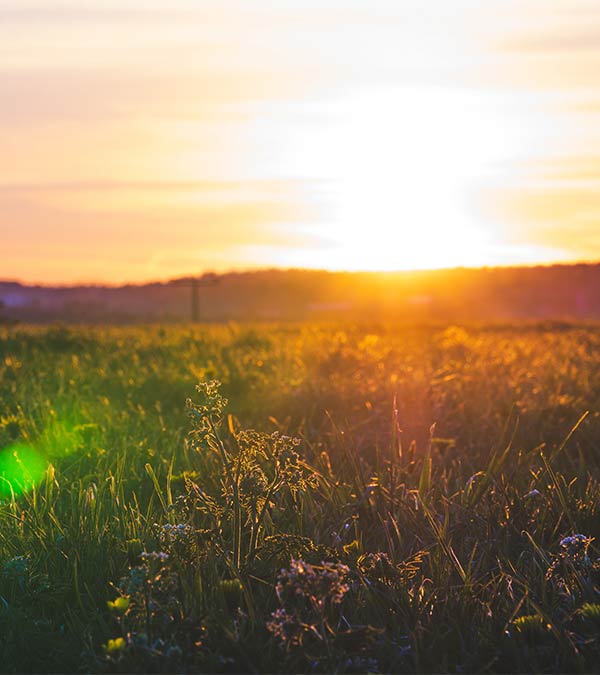
At the same time, especially during winter, we also spend much of the daytime indoors, where light exposure represents only a fraction of natural sunlight. The resulting lack of natural light can lead to problems such as sleep and eating disorders, lack of energy, and even severe depression. In this context, light therapy has proven particularly effective in northern countries with long, dark winters, helping to alleviate seasonal depression.
Another aspect of our modern lifestyle that can cause difficulty falling asleep is the use of technical devices such as televisions, smartphones, or laptops in the evening hours. Not only their content can keep us awake, but also the artificial light emitted by their screens. The same applies to artificial lighting that extends our evenings. Blue light in particular—such as that emitted by LEDs—is especially problematic before going to bed.
The Full Moon and Sleep Disturbances
Many people have difficulty sleeping during a full moon and feel drained and unrested in the morning. This may be due to the effect of the moon’s bright light shining through the window, which can inhibit the production of the sleep hormone melatonin. Although this sensitivity to the moon has not yet been conclusively proven scientifically, some studies indicate that people in cities as well as traditional communities in regions where artificial light plays little to no role tend to sleep less three to five days before the full moon. Researchers therefore speculate that our ancestors may have used the time of bright moonlight for activities other than sleep, and that shorter sleep phases during luminous nights may have represented an adaptive advantage.
``However, completely independent of the current phase of the moon, more and more people are suffering from sleep problems. According to surveys, this affected around 80 percent of working adults in Germany in the past year. The resulting constant fatigue is often perceived as a significant reduction in quality of life and can have serious negative effects on health, including impaired metabolism, weight gain, cardiovascular problems, and even an increased risk of cancer. Such an imbalance in the sleep rhythm can, however, be well balanced through gentle approaches such as lifestyle changes supported by beneficial medicinal plants.
“Go to bed with the hens and rise with the roosters!”
German proverbHerbal Teas & Plants
A wonderful way to unwind in the evening and prepare the body for a restful night’s sleep is with herbal teas. A wide variety of medicinal plants and culinary herbs can be used for this purpose—one should simply make sure that they do not have stimulating or energizing effects.

Greek Mountain Tea (Sideritis scardica)
The lesser-known Greek mountain tea (Sideritis scardica), also known as shepherd’s tea, is also well suited for a healthy, cleansing morning and evening routine. In Greece, it is a traditional medicinal remedy and was historically consumed by shepherds to unwind after a long working day. This herbaceous plant grows to a height of around 50 centimeters and naturally occurs mainly in high-altitude regions above 1,000 meters in the Mediterranean area. Our Greek mountain tea comes from certified organic cultivation and stands out for its rich content of essential oils and flavonoids.


Astragalus (Astragalus membranaceus)
In Asia, astragalus (Astragalus membranaceus) is commonly used as a calming aid to support falling asleep. In Traditional Chinese Medicine, the plant is known as Huang Qi, has been used for centuries, and is valued as an adaptogen. It is regarded as a plant that helps regulate stress and support energy balance, which is why it is often associated with sleep-related concerns.
Conclusion
Especially in winter, we truly feel the profound impact that sunlight has on our bodies. For a healthy and energetic life, we depend on natural light—something that cannot be replaced by artificial indoor lighting. Our natural sleep rhythm realigns when we spend enough time outdoors and avoid negative influences such as excessive screen time in the evening. A healthier lifestyle can be supported by everyday rituals, such as taking a calming moment to enjoy a cup of tea before going to bed. It is particularly important to bring your attention into the present moment and allow the mind to settle, while savoring the warmth and aroma of the tea in your cup with all your senses.

"Die Sanfte Gärtnerin" guides you through her Demeter garden, picking, gathering and blessing the herbs. Our tea Licht der Erde is an herbal tea blend created by us. This exquisite combination of different herbs protects you and awakens your inner radiance. The tea is a blend of: Calendula Agastache Elder Lemon balm Yarrow Nettle Verbena Apple mint Product information Our product contains no fillers, colorants or preservatives. 100 % natural and vegan, with no added sugar. Demeter certification All ingredients come from our own Demeter-certified cultivation. Directions for use Pour boiling water over one heaped teaspoon per cup (200 ml) and allow the tea to steep for a maximum of 8–10 minutes. Ingredients Calendula*, agastache*, elder*, lemon balm*, yarrow*, nettle*, verbena*, apple mint*.*from certified biodynamic cultivation Storage Store tightly closed in a cool, dry and dark place. Origin Produced and cultivated in France. Manufacturer Die Sanfte Gärtnerin Contents 35 g ℮
Content: 35 Gramm (US$37.63 / 100 Gramm)